How red and green became Christmas traditions

Have you ever wondered why Christmas has such a strong connection to red and green? These colours feel so natural to the season that we barely question them, yet the story behind them stretches across nature, Pagan rituals, cultural traditions, religion, and Victorian creativity.
When you bring all of these threads together, you see that this pairing did not come from one moment in time. It grew gradually over centuries.
The earliest origins. Pagan winter traditions
Long before Christmas existed, winter in Northern Europe was marked by Pagan celebrations such as Yule.
At the darkest point in the year people decorated their homes with evergreens. It was a way of surrounding themselves with signs of life during a season when the world felt cold and still.
Evergreen branches were chosen because they held their rich green colour throughout winter. Holly was especially popular because it not only stayed green but also carried bright red berries.
These colours came straight from the landscape around them. Green showed that life was still present even in the darkest months. Red appeared through the berries that arrived right at midwinter.

People simply brought indoors what nature offered at that time of year, and those colours became part of the season.
Many homes also hung an evergreen wreath on the front door. The circular shape represented the cycle of the seasons and the promise that light and life would return. It was a simple way of welcoming protection and good fortune into the home during the harshest part of winter. It’s one of the oldest winter customs that still continues today.

Christianity adds new meaning
When Christianity became more widespread it didn’t remove the earlier winter customs. Instead it layered new meaning onto what was already there.
Red gained a very specific symbolism within Christianity. It represents sacrifice and redemption because human blood is red. The colour is linked directly to the physical reality of blood and the religious meaning that follows from it.
Green gained meaning too. It came to represent eternal life and renewal. Christian symbolism connected naturally with the evergreens already used for centuries.
The German Christmas tree tradition. A Christian era custom
The decorated Christmas tree as we know originated in Germany within a Christian context. Long before this, Pagan communities had brought evergreen branches indoors during winter because they symbolised life and endurance.
When Christianity became established in Europe, these earlier customs did not disappear. They evolved. The presence of evergreens continued and gradually grew into the Christian tradition of bringing an entire fir tree into the home. Fir trees were familiar symbols of resilience during the coldest months.
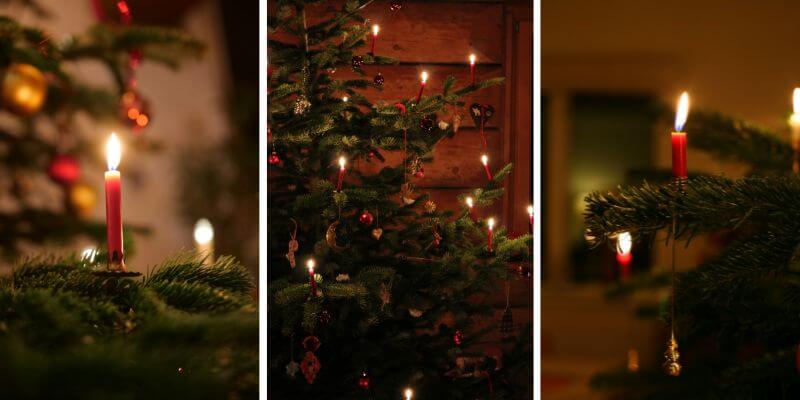
In Christian Germany people began decorating them with apples, ribbons, and later candles. These introduced purposeful touches of red which joined the natural green of the tree to create a clear seasonal palette. As this Christian tradition spread across Europe and later the world, the pairing of red and green became even more firmly rooted in the celebration.

Victorian creativity. The moment everything comes together
In the Victorian era Christmas became more visual. Greeting cards, decorations, and illustrations were produced in huge numbers.
Holly appeared everywhere because it already carried meaning from Pagan tradition, Christian symbolism, and the German Christmas tree.
Its glossy green leaves and bright red berries provided a ready made colour palette that Victorians embraced with enthusiasm.
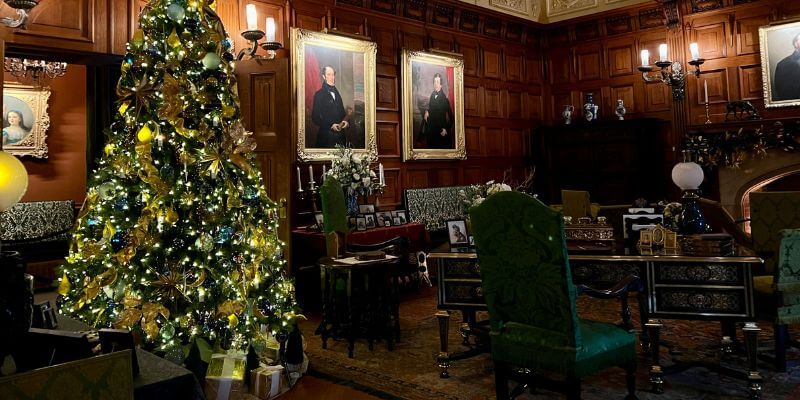
Their illustrations and decorations became so popular that they shaped the Christmas imagery we still recognise today. This period played a major role in cementing red and green as the colours of Christmas.
How all the threads come together
When you look at the full story you can see that the pairing of red and green did not begin with a single idea or tradition. It began with nature.
It grew through Pagan midwinter rituals. It evolved through Christian symbolism. It developed further through the German Christmas tree tradition.
It became visually iconic through Victorian creativity. Each layer reinforced the colours until they became inseparable from the celebration itself.
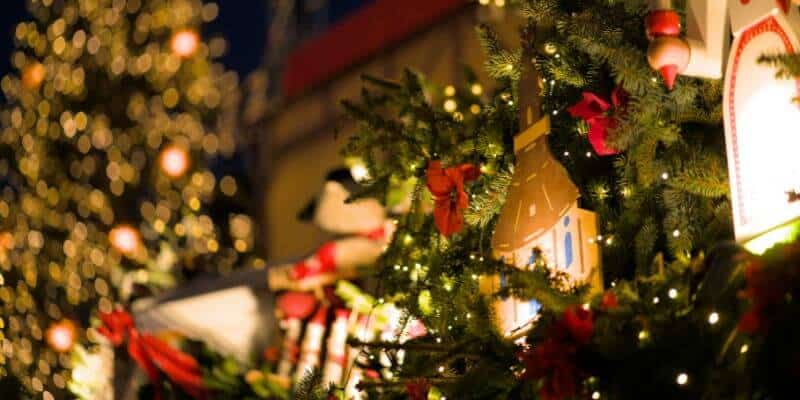

So the next time you see red and green decorations, you are really seeing thousands of years of tradition woven together. Nature, culture, and belief have shaped these colours into the familiar symbols we recognise today.
Wishing you a colourful Christmas,
Karenx
Images via @unsplash
Note: Christmas traditions have grown and changed over many centuries. The stories and influences shared here reflect the parts that appear most consistently across historical sources.
SIGN UP FOR MY NEWSLETTER
Get a Free Chapter from The Little Book of Colour
© Karen Haller
Designed by cptcreative.com